-
-
-
-
-
-
-
-
-
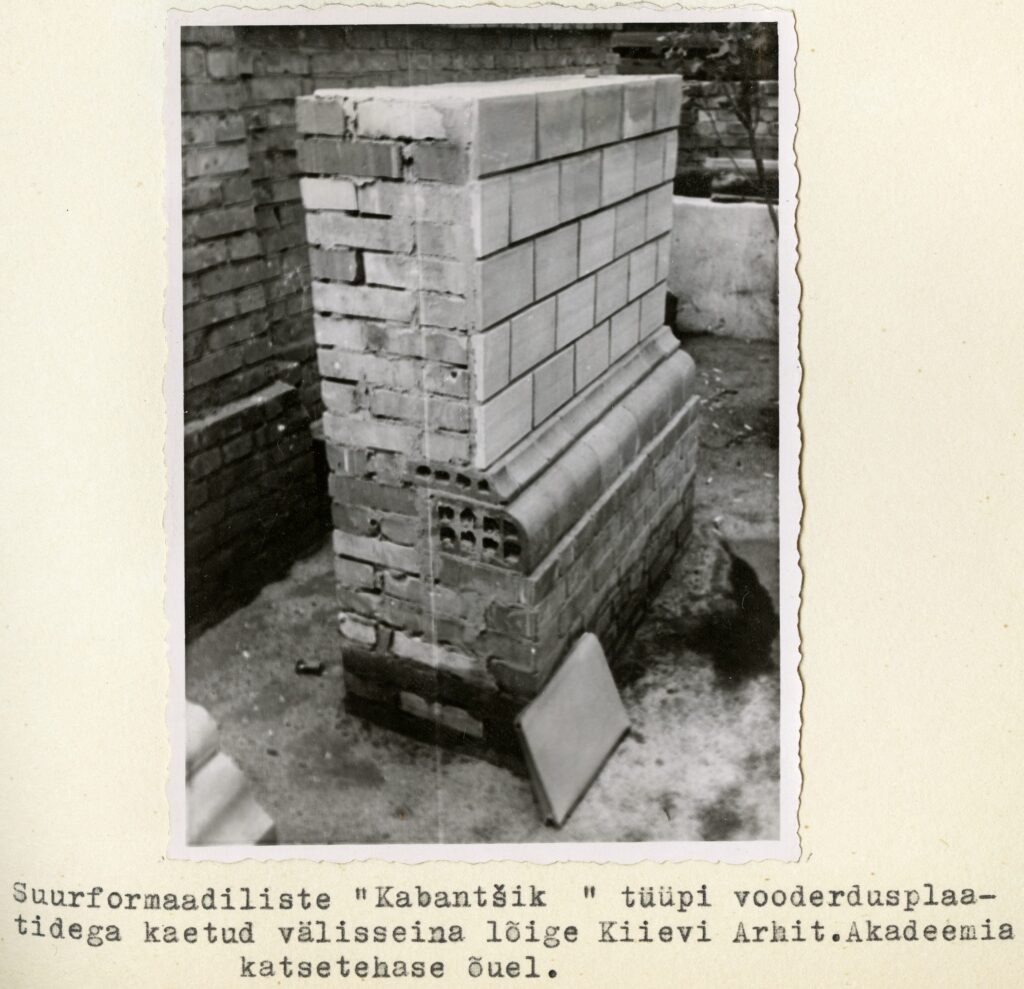
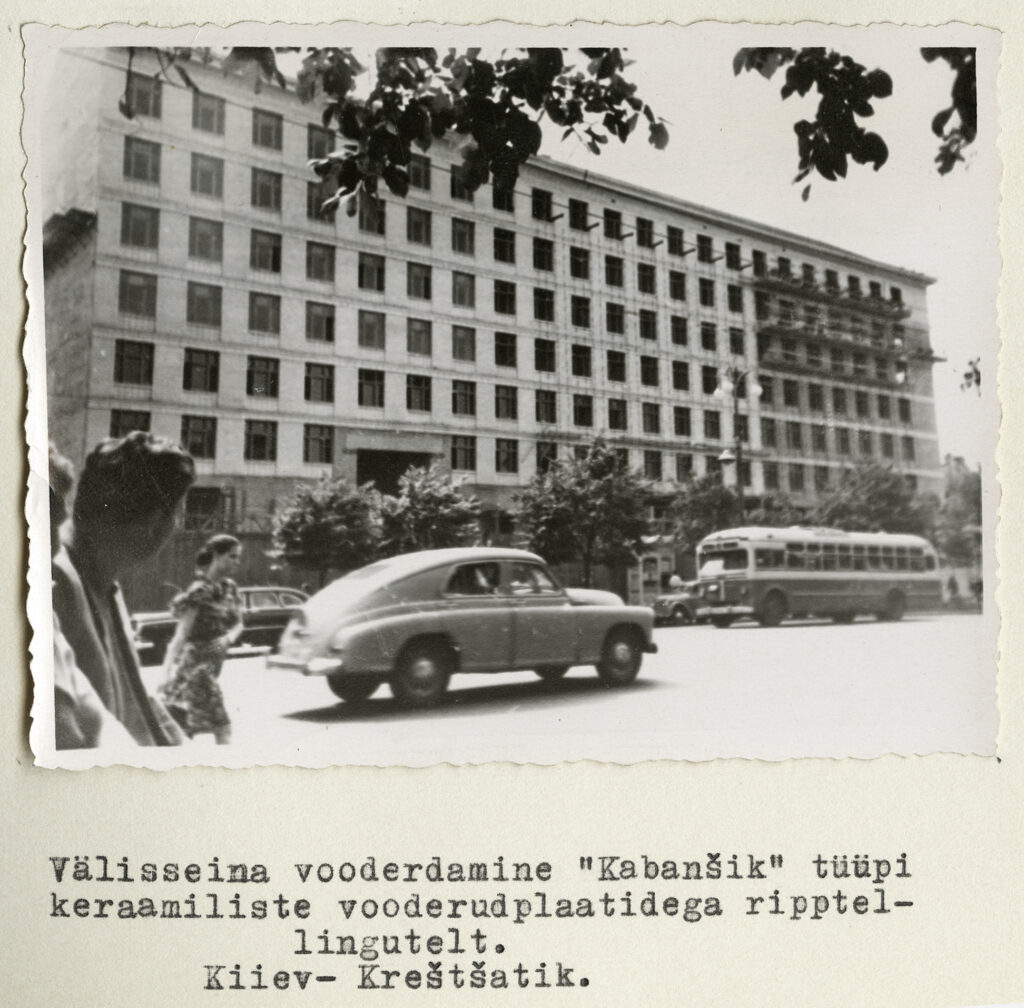
Installation of facade tiles along the Khreschatyk street in Kiev
Mart Port, 1956. EAM 10.4.12
Visit to the Building Ceramics’ Factories in Kyiv
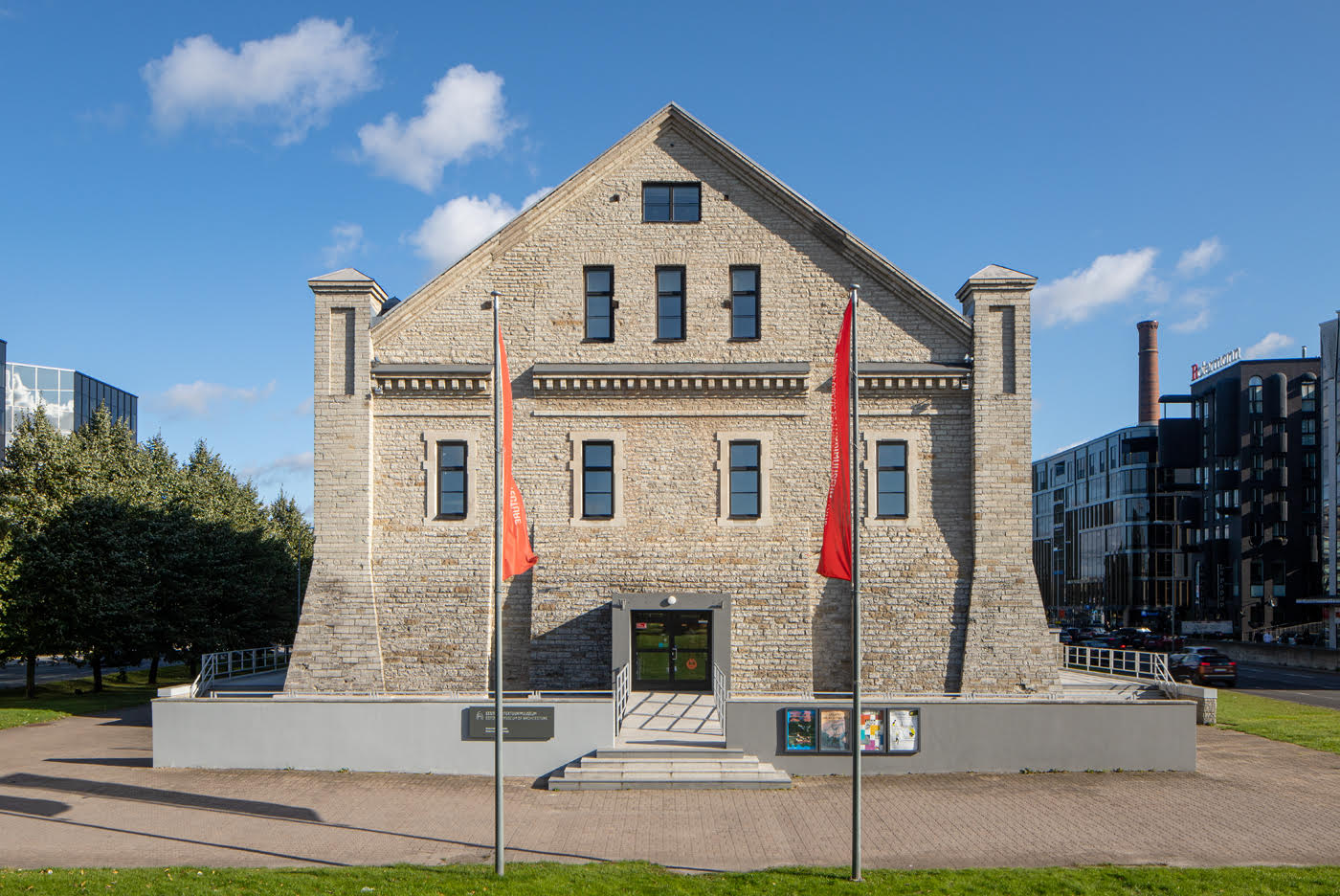
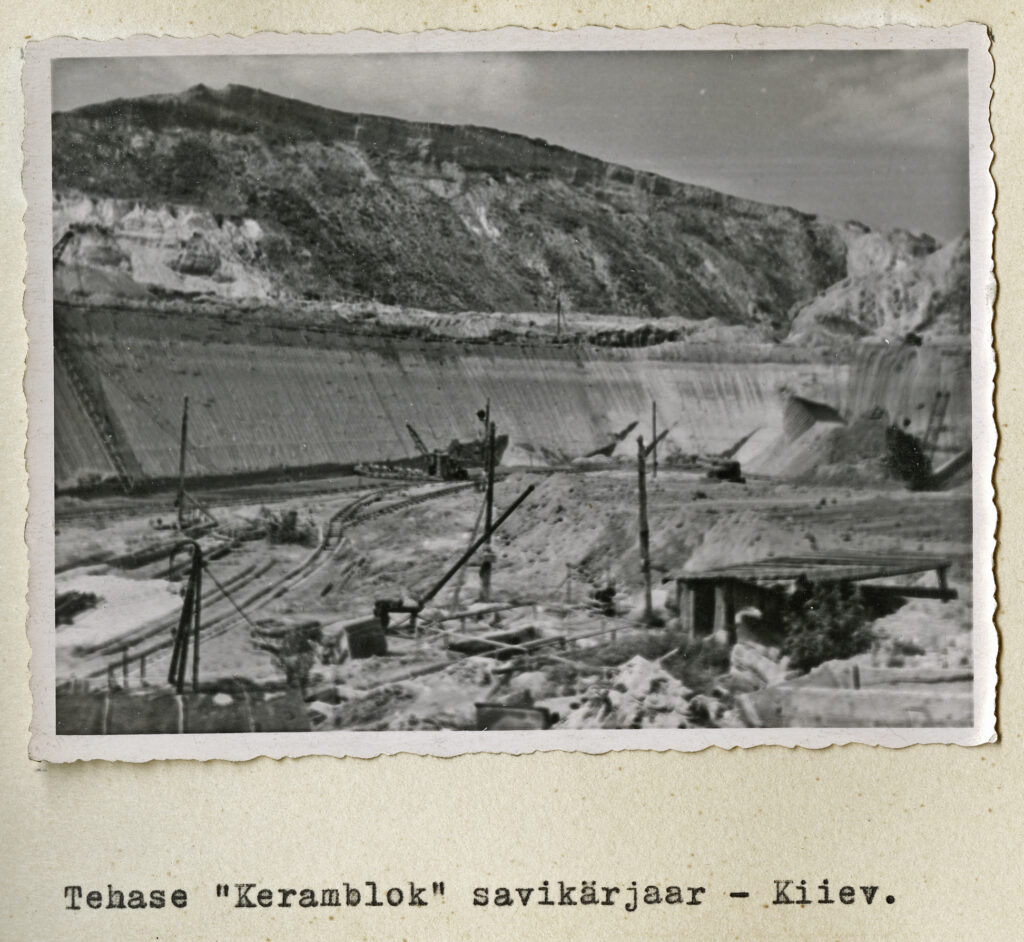
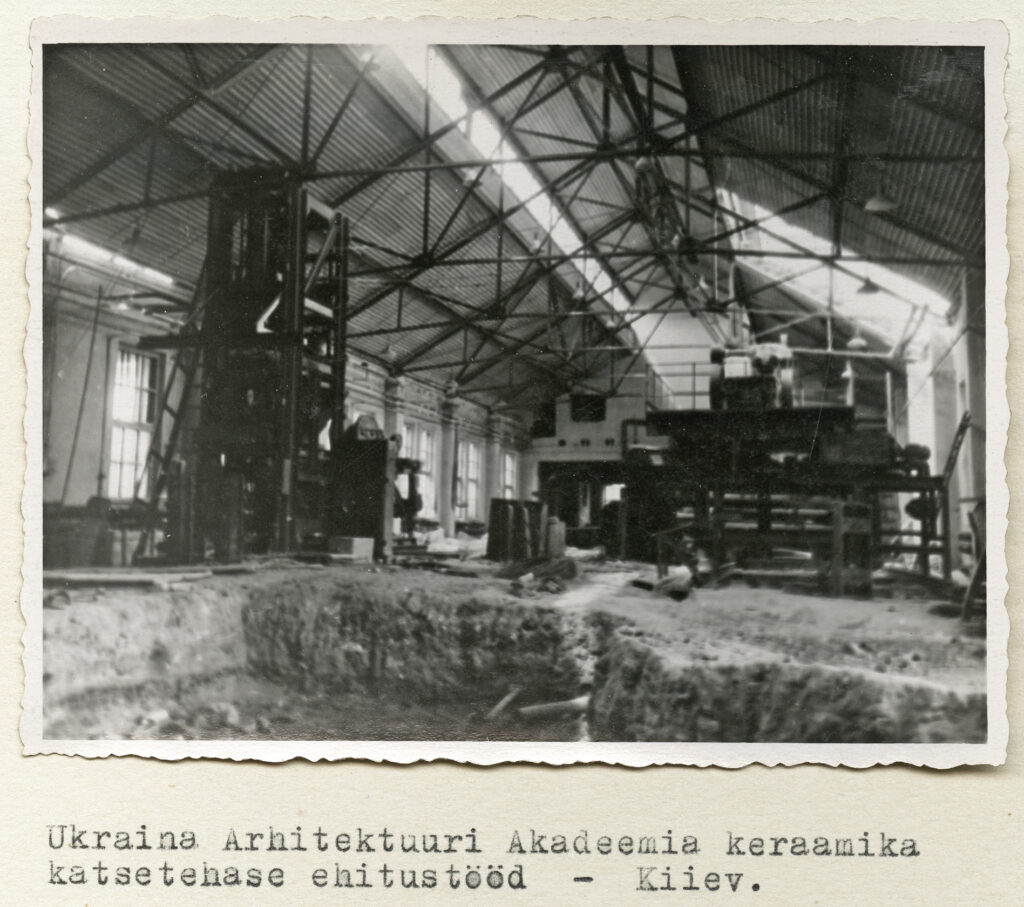
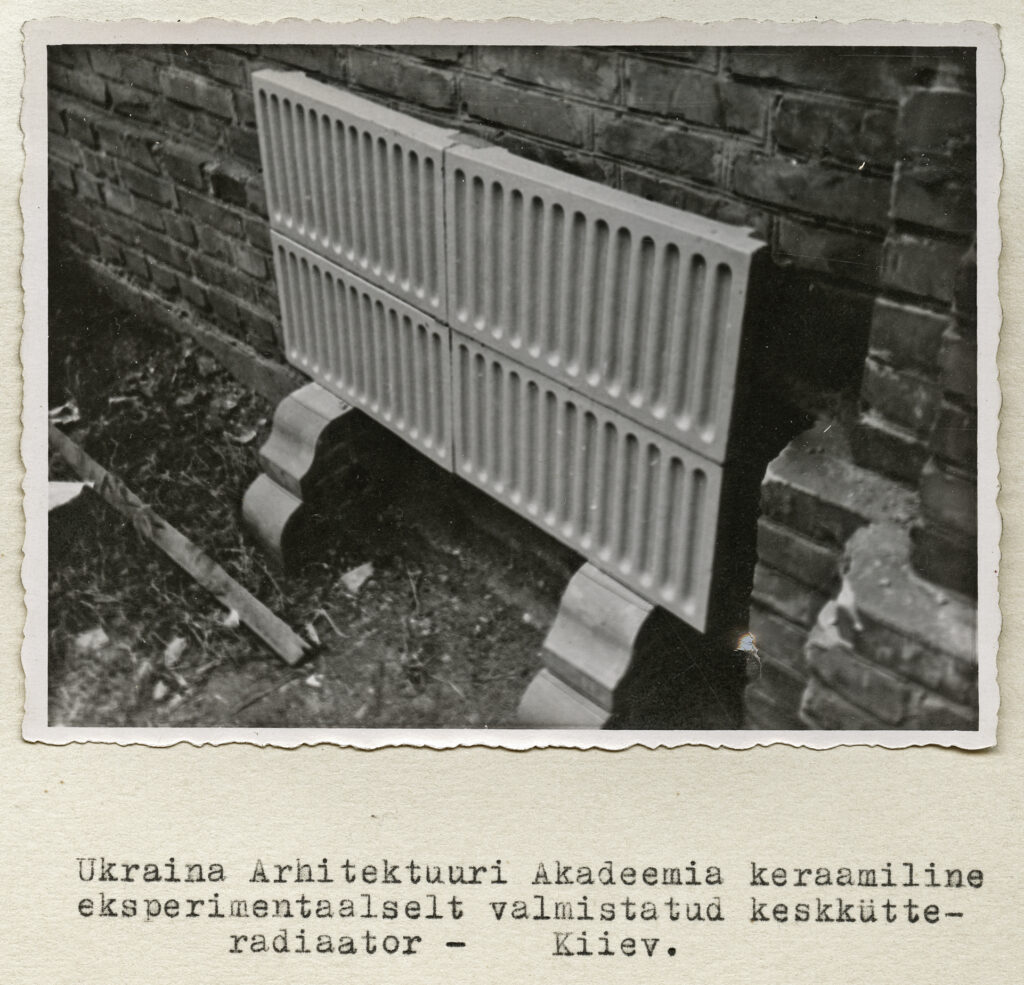
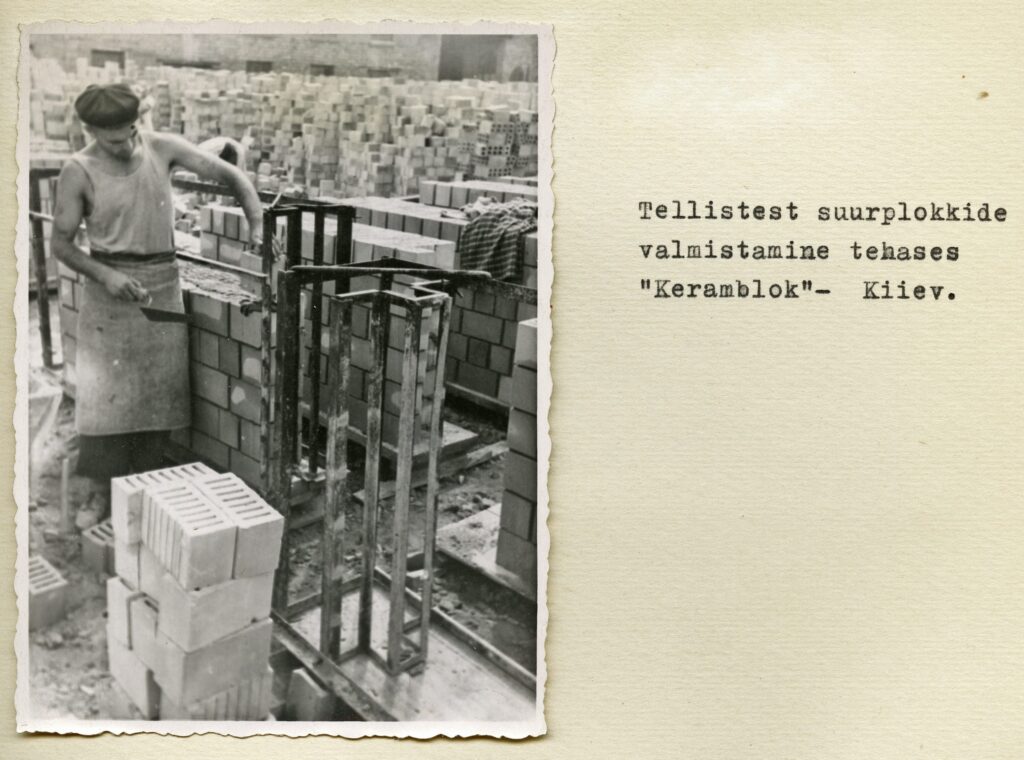
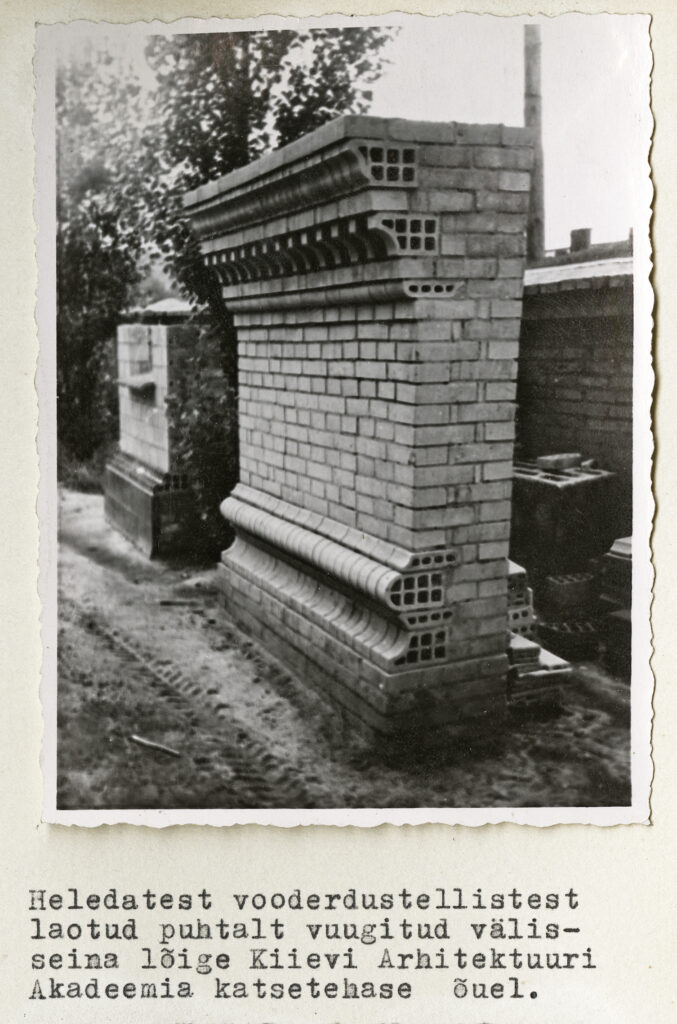
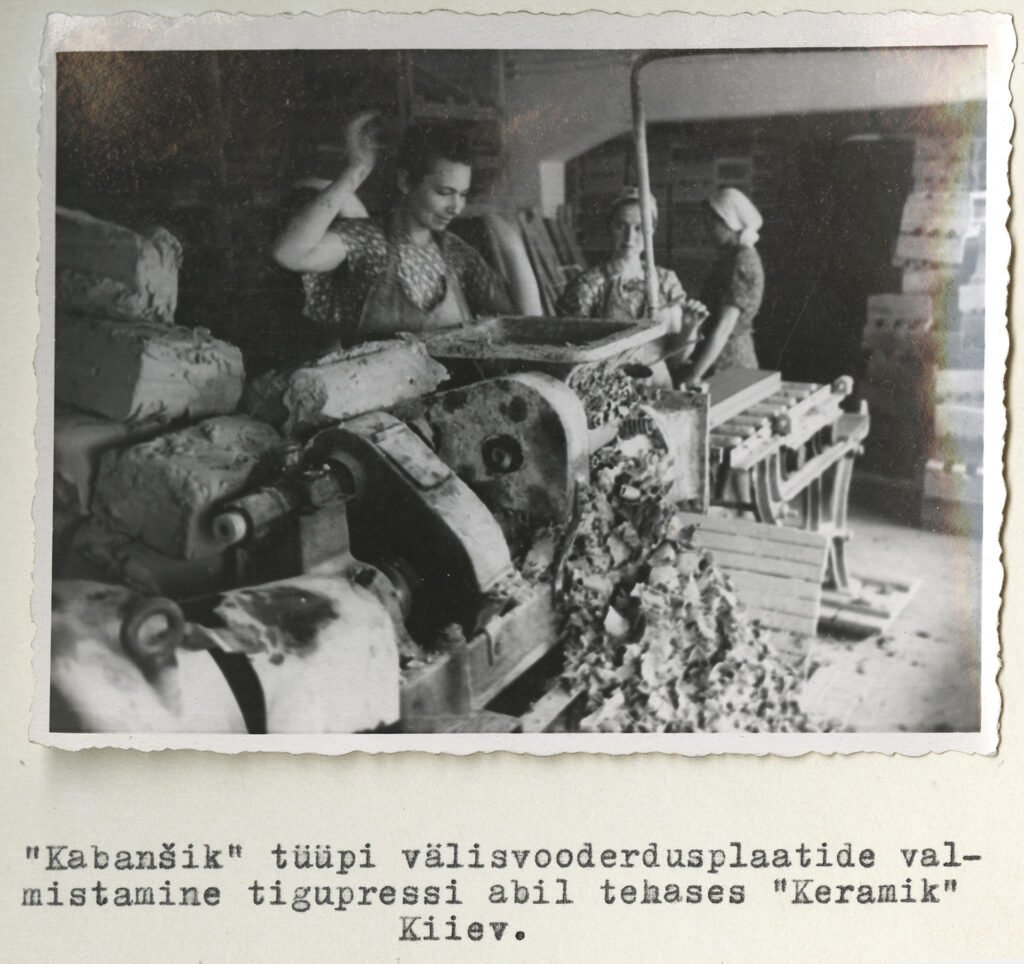
The aim of Mart Port’s creative business trip (1956) was to study whether it would be possible to increase the quality and speed of industrial construction in the field of intensified mass housing construction. During the month-long trip, he passed various cities on his way from Tallinn to Ukraine and back: Riga, Kaunas, Vilnius, Lviv, Ushgorod, Kyiv. In the report of the business trip, the architect concludes that in Latvia and Lithuania, for example, the construction methods related to the construction of mass housing are quite similar here, but the tiles used for the exterior façades, which were produced in Kyiv, deserve special attention. From there he took detailed pictures for the report. He was particularly impressed by the lining of local clay tiles of the “Kabanchyk” type, developed at the Kyiv Academy of Architecture. The “kabanchyks” were light tiles, partly hollow, which were installed on the wall using small and hanging scaffoldings. The architect already knew that in Estonia it is possible to obtain the white clay needed for its production from the Joosu quarry in Võru County. During the trip, he visited the Keramik and Keramblok ceramic tile factories and the red clay mine of the latter. The Ukrainians, who have a long tradition in the clay industry and building ceramics, also introduced him to a experimental ceramics plant under construction at the Kiev Academy of Architecture, where new prototypes used in construction were completed. In the report, he pointed out that knowledge was shared bilaterally. The builders of Kyiv, Minsk, Vilnius and Riga had got acquainted with the method of covering the walls with granite plaster used in Tallinn and praised the innovativeness of this method. Text: Sandra Mälk
-
-
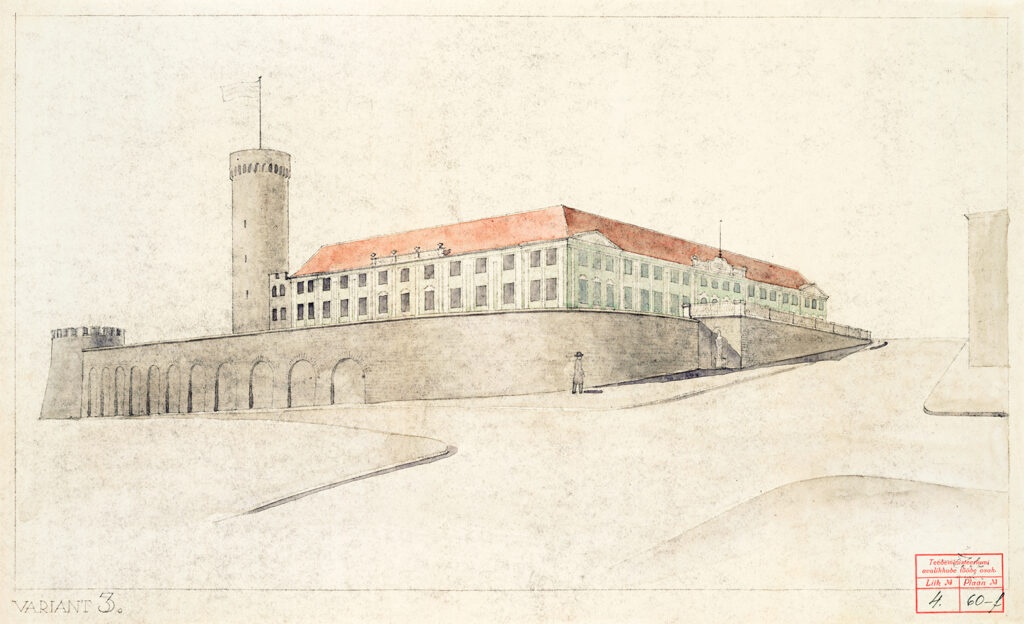
Version 3 of the reconstruction of Toompea Castle and Gardens. Alar Kotli
Alar Kotli, 1933–1936. EAM 2.11.15
Reconstruction of the Toompea Castle and the castle garden
The aspiration for representability that began in the second half of the 1930s made its way to architecture via state buildings, manifesting in the use of traditional forms and details. The Estonian government, which had centred around Toompea, reconstructed the southern wing of Toompea Castle and the Governor’s Garden in front of it, opting for a Neo-Baroque style that harmonised with the 18th-century Late Baroque look of the front of the castle. The supporting wall of the Governor’s Garden also received a fresh look. The Coloured copy in watercolour technique was added to the museum collection in 1991. Text: Sandra Mälk
-
-
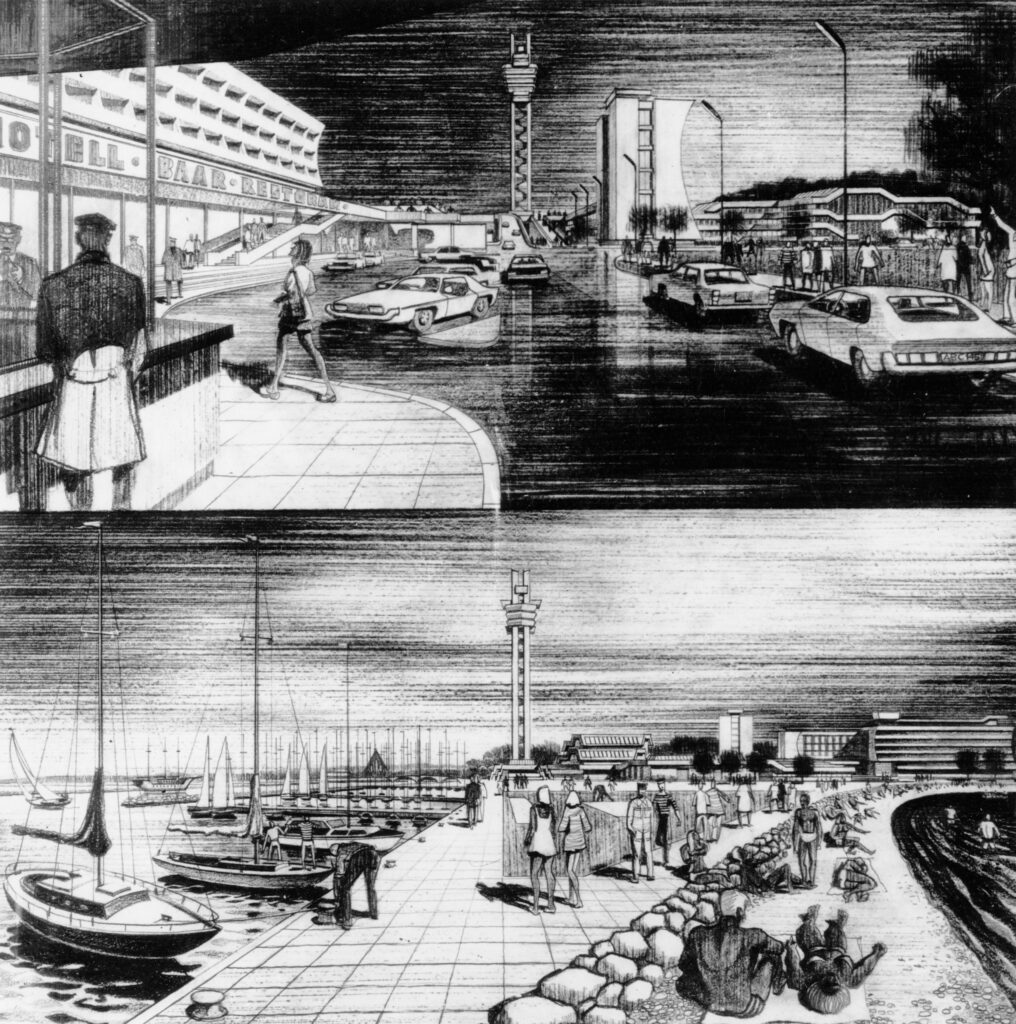
Visions of Tallinn Olympic Sailing Center
Mart Port, 1972–1973. EAM 52.4.2
Visions of Tallinn Olympic Sailing Center
Major design work preceded the sailing regatta of the 1980 Olympic Games in Tallinn. The Pirita estuary was redesigned to serve the public and sailors. As the local architects had little experience in creating a building complex that meets the requirements of the Olympic Games, the then city architect Dmitri Bruns decided to travel to Kiel, Germany, where the 1972 Olympic regatta was held, together with Mart Port, chief architect of the Estonian Project, and Urmo Kala, deputy chairman of the sports committee. There, with the kind assistance of the German colleagues the group got acquainted with the construction of the Olympic Sailing Center in Schilksee. The knowledge gained allowed us to announce an architectural competition in 1973 to find a project for the Pirita Sailing Center in which 12 works were submitted. The accompanying visualization comes from an album of Mart Port’s works and was probably part of a set of projects submitted to the competition but not awarded. The hotel has a hotel-bar-restaurant for athletes and guests at the forefront, and of course the Olympic light tower is centrally located in the complex. Like the Schilksee sailing center, the buildings have been built in stages. While in the lower picture the pier edge is used by holidaymakers, in the upper picture the tone is set by cars, which are probably influenced by Western magazines. The design features modern American cars, including the sporty-looking Dodge Challenger. The album was donated to the museum by Heldi Toom in 2014. Text: Sandra Mälk
-
-
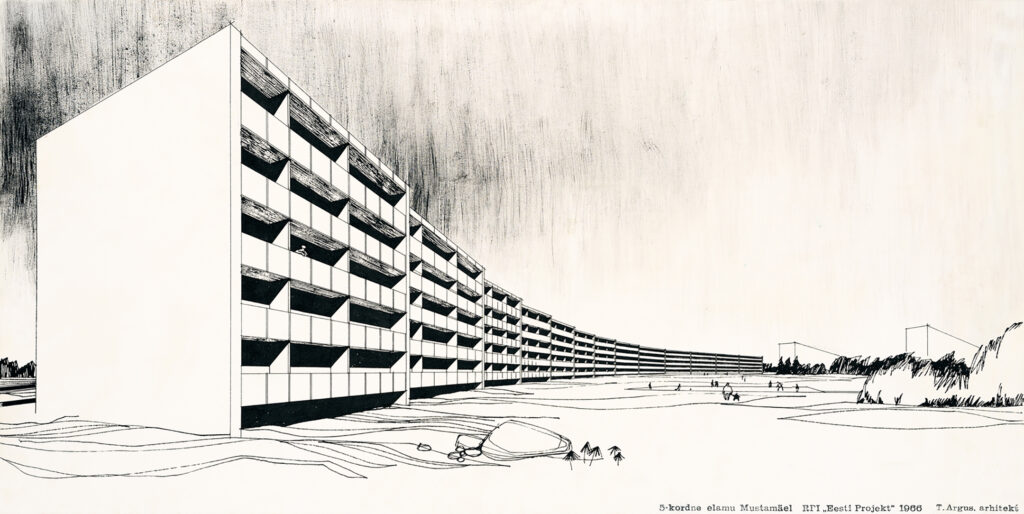
Design of an apartment building in the Mustamäe II microdistrict. Tiiu Argus, 1966
Tiiu Argus, 1966. EAM 4.2.3
Five-storey apartment building in Mustamäe, Tallinn
The Mustamäe district, which was erected in Tallinn in the 1960s, was divided up into microdistricts that were designed to accommodate 6,000–10,000 residents. The monolithic form of the panel apartment blocks designed for the second microdistrict is based on the development of prefabricated panels, permitting the construction of buildings with five or more storeys, not just four storeys like before. In the context of the depreciated housing options at the time and before the microdistricts became dormitory suburbs, the first panel apartment blocks that dominated the landscape looked innovative. They were thought to display a community effect and bring neighbours closer together. This ink drawing was given to the museum by design office Eesti Projekt in 1992. Text: Sandra Mälk
-
-
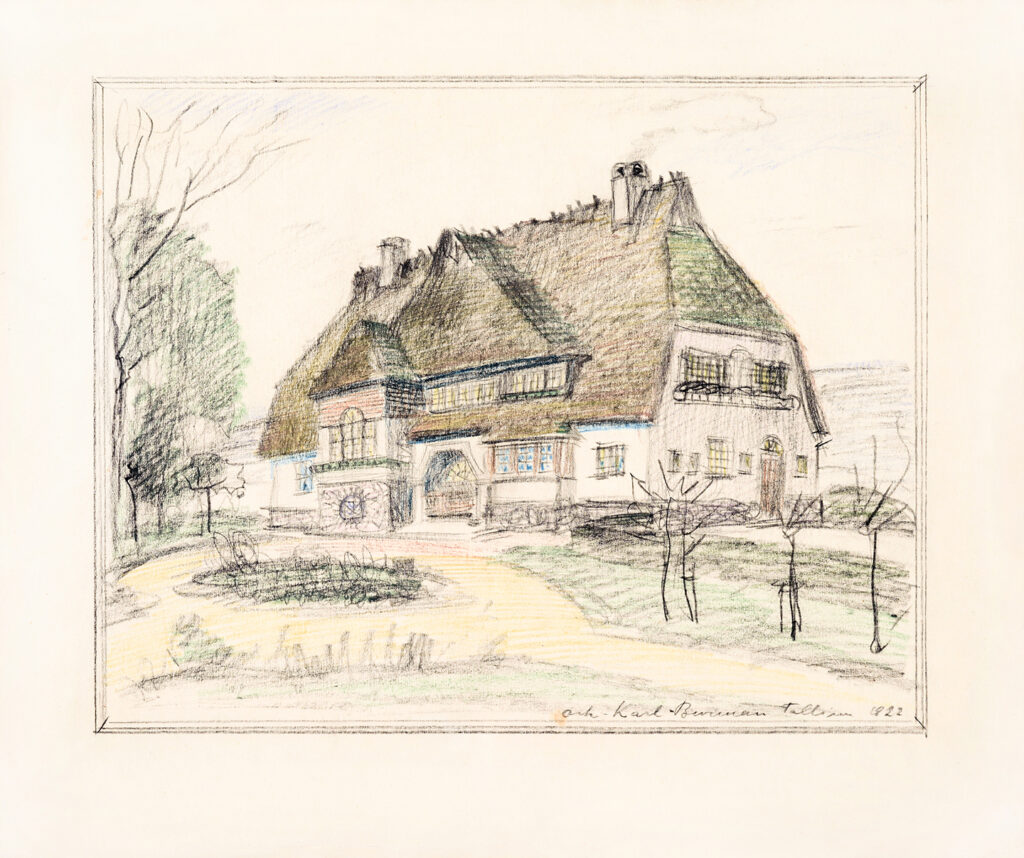
Drawing of August Hanko’s residence, 1922. Karl Burman
Karl Burman senior, 1922. EAM 2.2.695
Hanko’s house in Tartu County
The drawing depicts a dwelling in a farm in Kambja owned by journalist and entrepreneur August Hanko. At the time, Karl Burman favoured National Romanticism and drew inspiration from traditional Estonian farm architecture, using poetic elements to mitigate its practical nature. Burman’s oeuvre includes repeated elements in the form of bay windows, porches and a high-hipped thatched roof. Small grid windows of different sizes and shapes are also common to his work. As is characteristic to the style, Burman avoided excess practicality in the arrangement of space, placing a spacious hall in the centre of the layout and the living quarters surrounding it. The project was never realised.
Text: Sandra Mälk
-
-
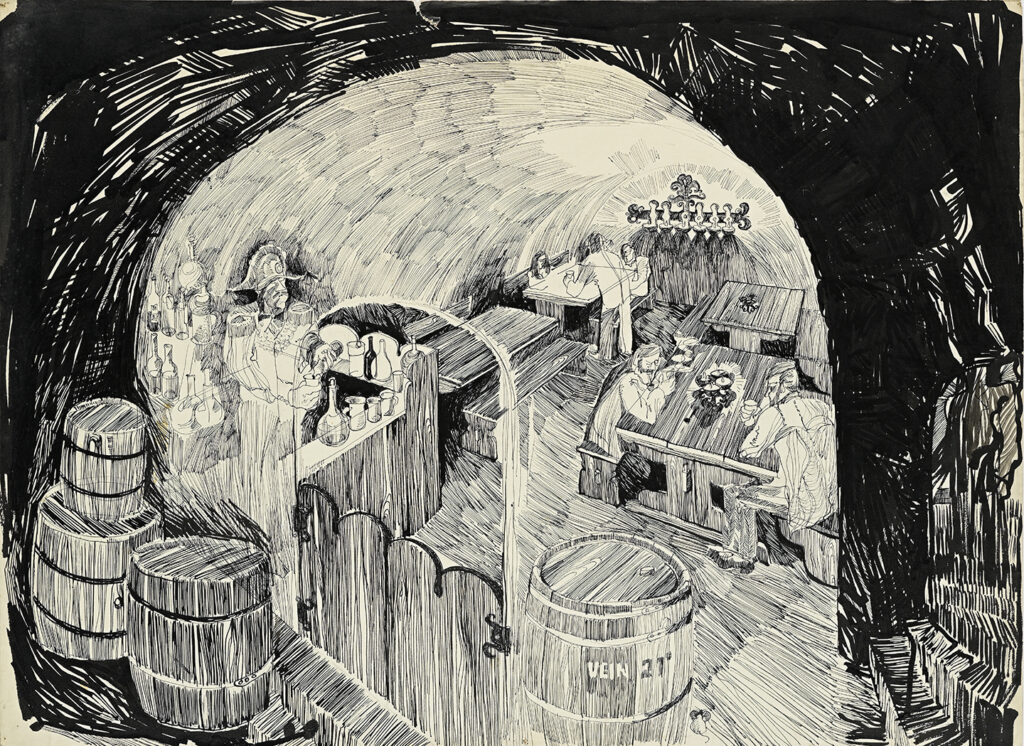
Interior design of Café Neitsitorn (Maiden Tower) in Tallinn. Aala Buldas
-
-
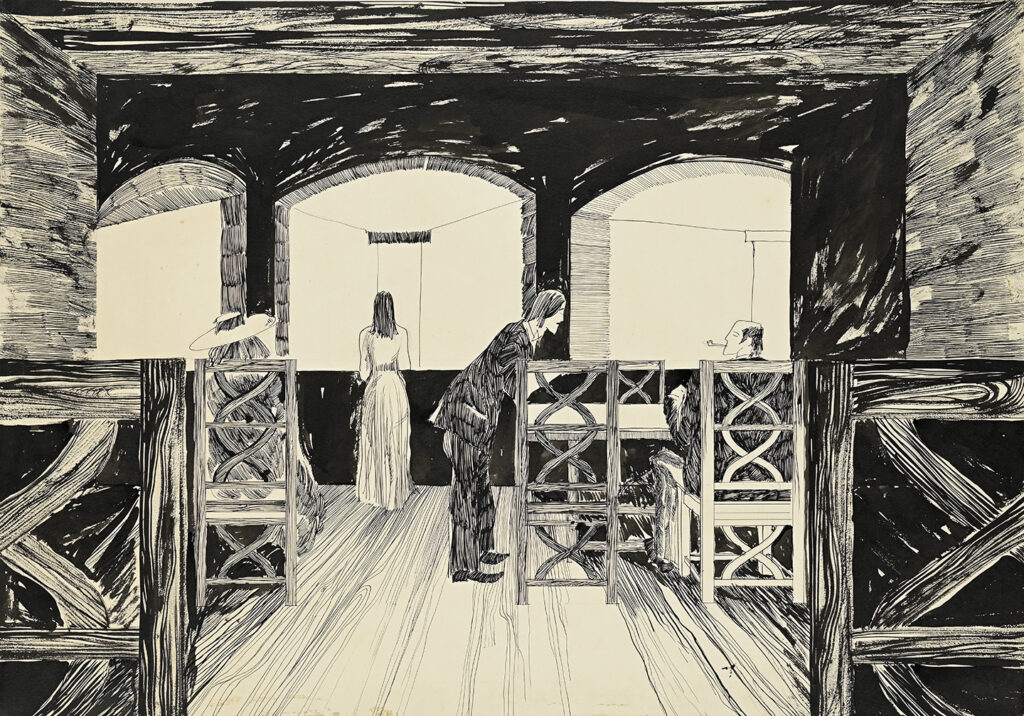
Interior design of Café Neitsitorn (Maiden Tower) in Tallinn. Aala Buldas
Interior architect Aala Buldas, 1970–1980. EAM 4.7.17
Café Neitsitorn (Maiden Tower)
One of the most unique defensive towers of the Tallinn city wall, the quadrilateral Neitsitorn (Maiden Tower) was restored in the 1970s. The Maiden Tower together with Kiek in de Kök were defensive structures of crucial importance in the defense of medieval Tallinn. However, after the loss of the status of Tallinn as a fortress city, the centuries-long defense function of the wall towers changed, and in the 19th century the wall towers were rebuilt into dwellings, as did the Maiden Tower. The two-storey residential building became a home for renowned artists and writers, whose apartments had several studio rooms. In the early 1970s, field research on the Tallitorn (Stable Tower) and the Maiden Tower began in order to find a public function for the building. The work was encouraged by the forthcoming Olympic regatta. During the reconstruction of the Maiden Tower, about half of the structure was rebuilt almost as new. The building was given a new floor, underground utility rooms and an impressive glass wall on the Old Town side. The Café Neitsitorn was situated in the new premises, which opened its doors to the public in 1980 and immediately became a big hit. The authors of the tower’s reconstruction design were an architect Tiina Linna, an art historian Villem Raam, and the café’s interior design was made by Aala Buldas. In 2022, the drawings were donated to the museum by Eva Mölder from the restoration company Vana Tallinn. Text: Sandra Mälk
-
-
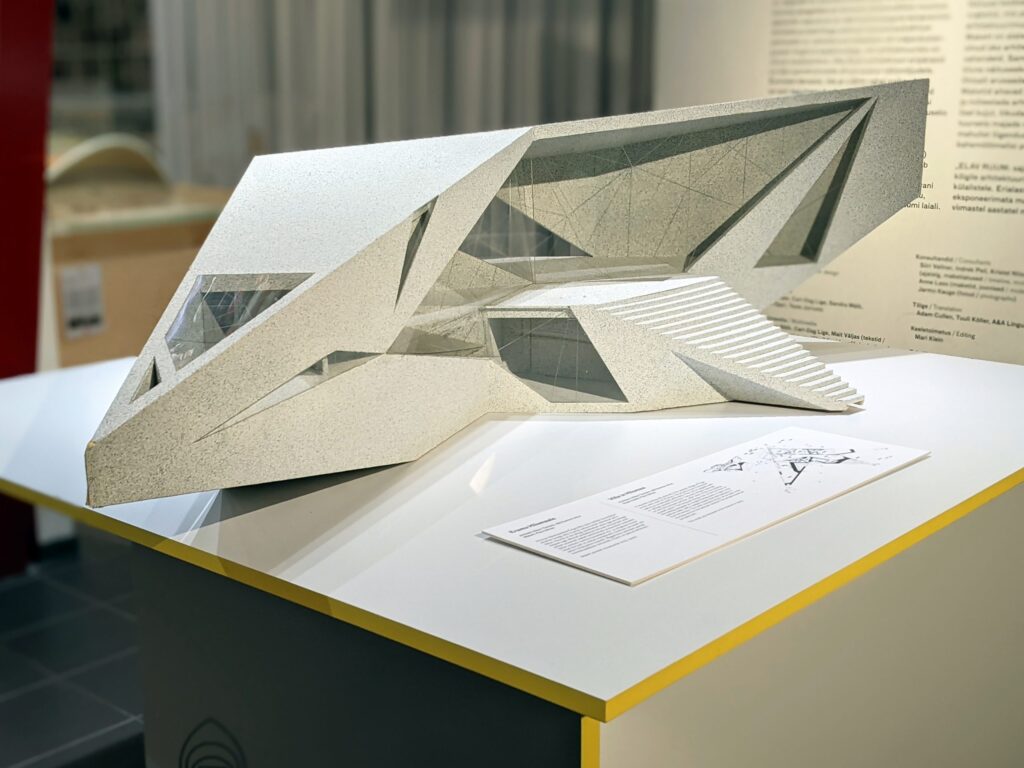
Villa in Hiiumaa. Villem Tomiste, 2004
Architect Villem Tomiste, AB Kosmos 2004. Model: Paco Ulman. EAM MK 121
EMA 30 / Tiny tour of models: Villa in Hiiumaa
A futuristic-looking villa planned in the seaside village of Õngu on the west coast of Hiiumaa. The private house is characterised by an accentuated artificiality. There are no aligned walls or ceilings parallel to the floor. Variously shaped openings cut into the fractured surfaces, offer views of the surrounding unspoilt nature. The living and dining room on the second floor of the building, designed as a single flowing space, is open to the seafront reeds, with a wedge-shaped staircase leading to it from the terrace. This private house has not been built. The model was donated to the museum in 2005. Text: Anne Lass